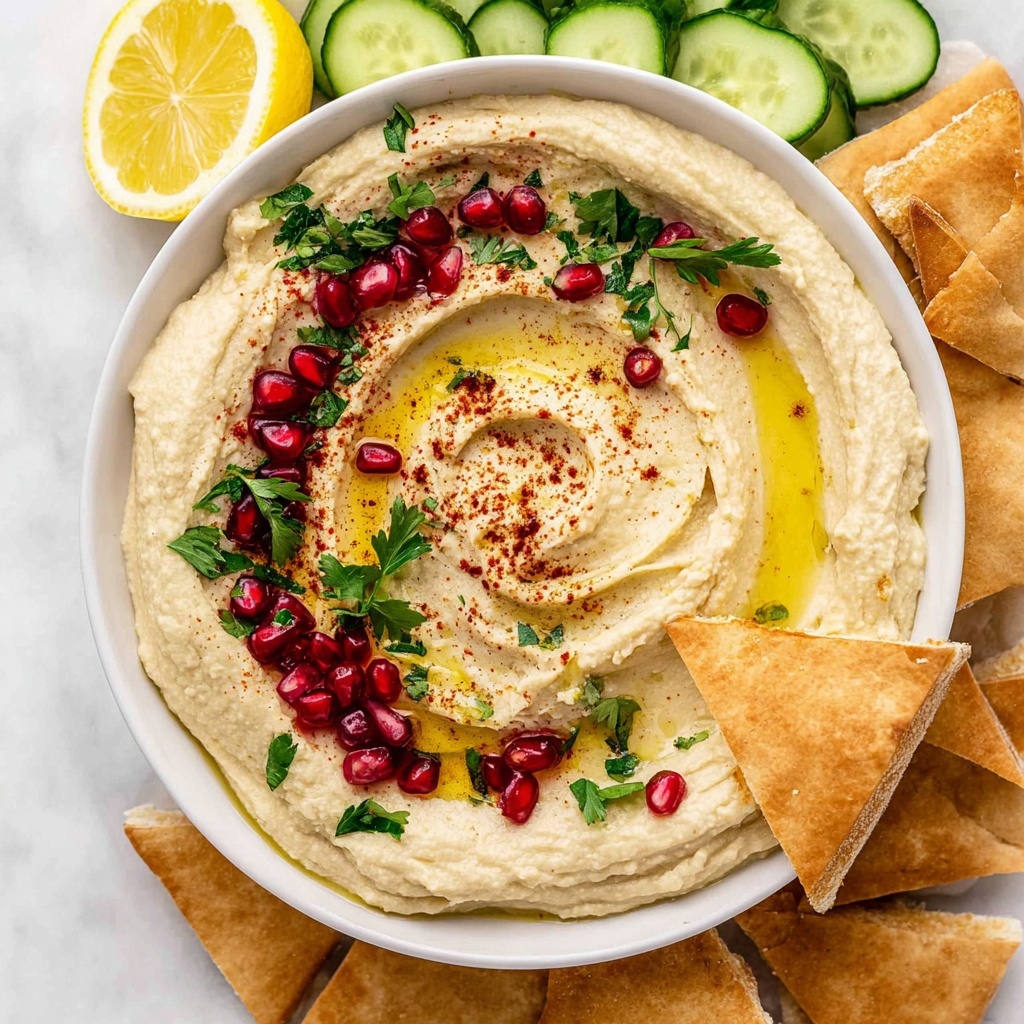
If you have been searching for a dip that is both luxuriously smooth and packed with flavor, this Creamy Hummus Recipe with Sumac & Olive Oil Recipe is your new best friend in the kitchen. It perfectly balances the nutty richness of tahini and chickpeas with the zesty brightness of lemon juice and the warm, tangy hint of sumac. The olive oil drizzle adds a luscious finish that elevates each bite, making this hummus irresistibly creamy and vibrant. Whether you’re a hummus lover or someone looking to try something fresh and wholesome, this recipe promises a delightful experience that you’ll want to share with everyone at your table.
Ingredients You’ll Need
These ingredients are simple and straightforward, yet each plays an essential role in building the flavor, texture, and color of this creamy masterpiece. From the protein-packed chickpeas to the zingy sumac, every element has its purpose in crafting that perfect smooth and flavorful hummus.
- 2 cans chickpeas, drained and rinsed: The creamy base of the hummus, packed with protein and fiber.
- 1 cup tahini paste: Adds a rich, nutty depth and silky texture that defines hummus.
- 1/4 cup freshly squeezed lemon juice: Provides a bright, tangy counterpoint to balance the richness.
- 4 cloves garlic, crushed: Infuses the hummus with savory warmth and a touch of sharpness.
- 1 teaspoon sea salt: Enhances all the flavors naturally without overwhelming.
- 6 tablespoons water: Used to reach the perfect creamy consistency with each blend.
- 1 tablespoon olive oil: Adds silkiness and a fruity richness on top.
- 1/2 teaspoon sumac powder: This vibrant, tangy spice gives the hummus a unique twist and pretty rose-red color.
How to Make Creamy Hummus Recipe with Sumac & Olive Oil Recipe
Step 1: Prep the Chickpeas
Start by using your hands to pop the skins off each chickpea and discard them. Yes, it takes a little patience, but this tedious step is the secret to achieving that ultra-smooth, velvety texture that sets this hummus apart. Removing the skins ensures every mouthful melts delightfully on your tongue.
Step 2: Blend the Chickpeas
Place your skinned chickpeas into a food processor and pulse until you get a smooth paste. This forms the creamy groundwork for your dip, so don’t rush—take your time blending for that silky foundation.
Step 3: Add the Flavor Boosters
Next, add tahini, freshly squeezed lemon juice, crushed garlic, and sea salt to the chickpea paste. Keep blitzing these together until everything is thoroughly combined, releasing a wonderful aroma and vibrant taste that will entice your senses.
Step 4: Achieve Ultimate Creaminess
Slowly pour in the water, one tablespoon at a time, blending continuously. This step smooths out the mixture perfectly, transforming the thick paste into an irresistibly creamy hummus that spreads like a dream.
Step 5: Plate and Garnish
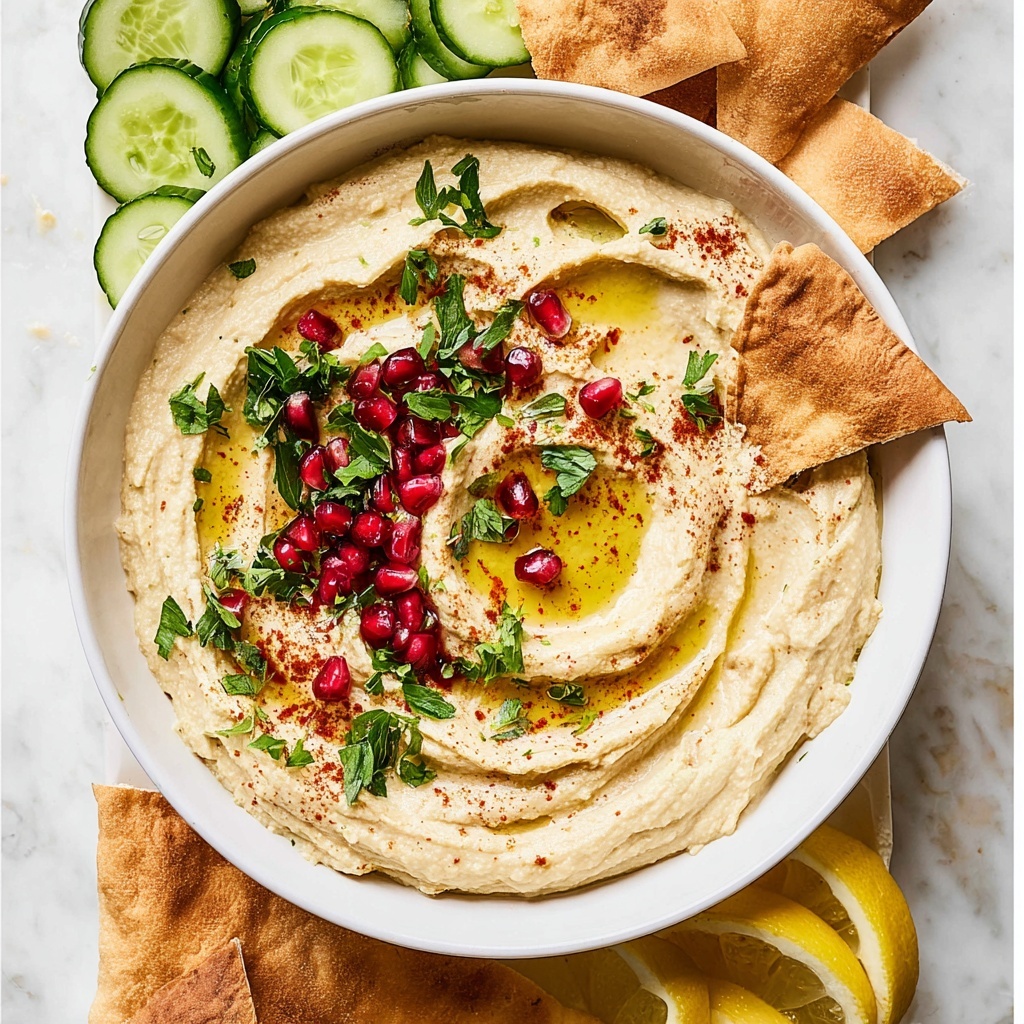
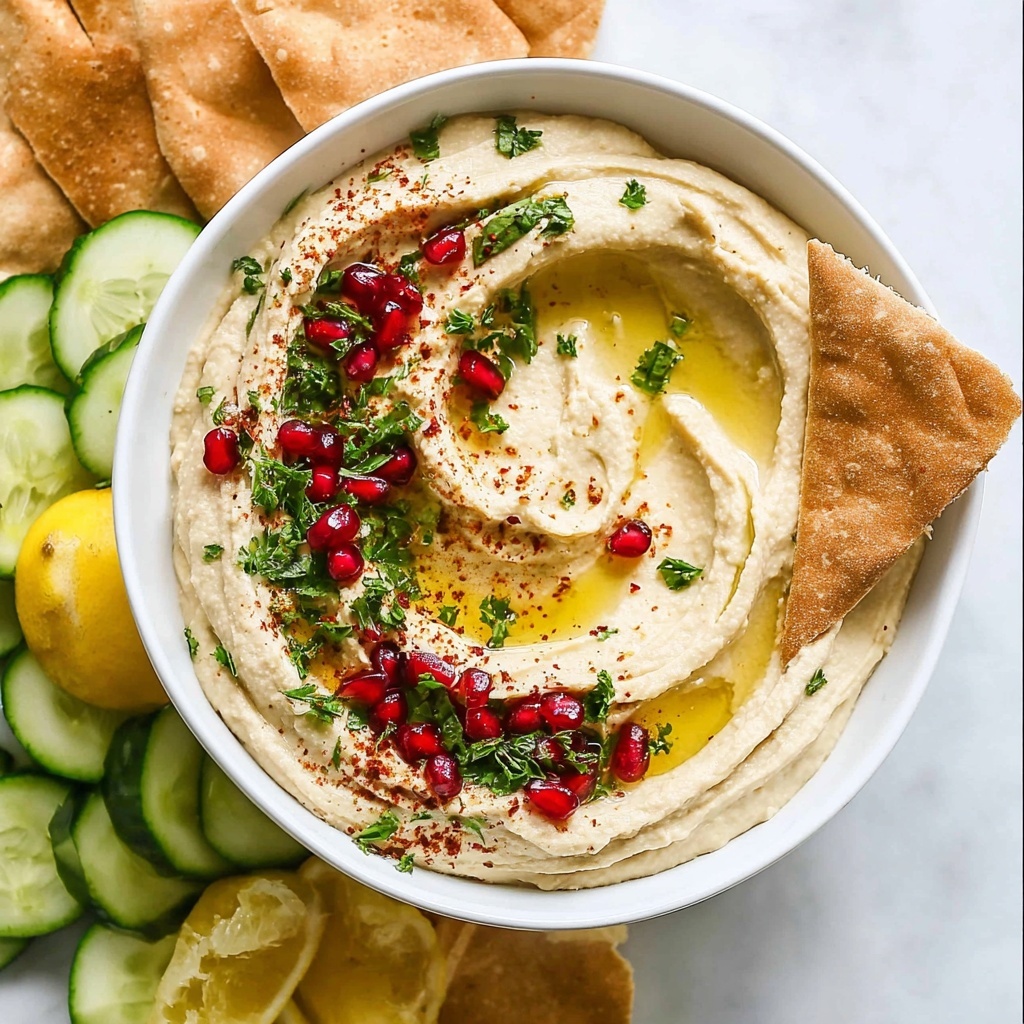
Scoop your hummus into a shallow bowl and gently spread it to create little wells on the surface. Drizzle liberally with olive oil and sprinkle sumac powder over the top. This not only adds a stunning color contrast but also amps up the tangy, citrusy notes.
Step 6: Add Optional Toppings
For extra texture and flavor, consider topping your hummus with fresh chopped herbs like parsley, toasted chickpeas, juicy pomegranate seeds, toasted pine nuts, or even vibrant cherry tomatoes. These add pops of color and delightful crunch that make every bite exciting.
Step 7: Serve with Accompaniments
Your Creamy Hummus Recipe with Sumac & Olive Oil Recipe is perfect with warm pita bread, crunchy crackers, or a vibrant assortment of fresh crudités. These pairings help you scoop up every bit of that velvety goodness and complete a wholesome, crowd-pleasing spread.
How to Serve Creamy Hummus Recipe with Sumac & Olive Oil Recipe
Garnishes
When it comes to garnishes, a simple olive oil drizzle combined with a dusting of sumac adds both an eye-catching pop of color and a delightful citrus tang that brightens the dish. Fresh herbs or nuts can also be sprinkled on top to add earthy freshness or crunchy texture, elevating the whole serving experience.
Side Dishes
This creamy hummus shines as part of a mezze platter alongside warm pita bread, crisp veggies like carrots and cucumber, or even grilled meats and roasted vegetables. Its creamy richness and zesty notes complement a vast variety of sides and are a proven crowd-pleaser.
Creative Ways to Present
Try serving your hummus in a hollowed-out bread bowl for an inviting centerpiece or spread it as a base layer on a large platter topped with colorful roasted veggies, olives, and crumbled feta cheese. Alternatively, dollops of this Creamy Hummus Recipe with Sumac & Olive Oil Recipe look gorgeous when spooned into small serving bowls for individual portions at gatherings.
Make Ahead and Storage
Storing Leftovers
Leftover hummus can be stored in an airtight container in the refrigerator for up to five days. The flavors actually deepen over time, so you may find it tastes even better the next day. Just make sure to drizzle a little olive oil on top before sealing to keep it fresh.
Freezing
If you want to save it for longer, hummus freezes well. Place it in a freezer-safe container, leaving room for expansion, and freeze for up to three months. Thaw overnight in the fridge, then stir well before serving to restore the creamy consistency.
Reheating
Hummus is generally enjoyed cold or at room temperature, but if you prefer it slightly warmed, gently heat in a microwave or over a double boiler until just warm. Avoid overheating, as it can separate and lose its silky texture.
FAQs
Can I use dried chickpeas instead of canned?
Absolutely! If you use dried chickpeas, soak them overnight and cook them until tender before proceeding. This can add more control over texture and flavor, but using canned chickpeas is a great shortcut that still yields delicious results.
What makes sumac special in this hummus recipe?
Sumac lends a unique tangy and citrusy flavor, brightening the hummus in a way that lemon alone can’t. It also adds a beautiful reddish hue that visually enhances the dish, making it more inviting and flavorful.
Is tahini paste necessary?
While tahini is traditional and adds that signature richness and nuttiness, you can make hummus without it, but expect a different flavor and a bit less creaminess. For the authentic Creamy Hummus Recipe with Sumac & Olive Oil Recipe experience, tahini is key.
Can I make this hummus oil-free?
You can omit the olive oil if you prefer a lighter version, but keep in mind that olive oil adds silkiness and flavor depth. You might want to drizzle it on top at least when serving to maintain that luscious mouthfeel.
How can I make this hummus spicier?
To add a kick, consider stirring in a pinch of cayenne pepper or some smoked paprika during the blending process. Alternatively, garnish with chopped fresh chili or drizzle a little spicy chili oil on top for an exciting heat contrast.
Final Thoughts
This Creamy Hummus Recipe with Sumac & Olive Oil Recipe is truly a game-changer in the world of dips. The careful balance of flavors and textures makes it not just a delicious snack but an experience that warms the heart and soul. I encourage you to try this recipe and make it your own—it’s simple enough for everyday meals but special enough for entertaining. Once you’ve tasted the creamy smoothness and the bright, summery zing of sumac and olive oil, you’ll wonder how you ever lived without it!
Print
Creamy Hummus Recipe with Sumac & Olive Oil Recipe
- Prep Time: 20 minutes
- Cook Time: 0 minutes
- Total Time: 20 minutes
- Yield: 10 servings
- Category: Dip
- Method: Blending
- Cuisine: Middle Eastern
- Diet: Vegan
Description
A creamy, smooth hummus recipe made with chickpeas, tahini, lemon juice, garlic, and olive oil. This easy-to-make spread is perfect as a dip or appetizer and is enhanced by peeling the chickpeas for an exceptionally velvety texture. Garnished with sumac and olive oil, it pairs wonderfully with pita, crackers, or fresh vegetables.
Ingredients
Main Ingredients
- 2 cans chickpeas, drained and rinsed
- 1 cup tahini paste
- 1/4 cup freshly squeezed lemon juice
- 4 cloves garlic, crushed
- 1 teaspoon sea salt
- 6 tablespoons water
- 1 tablespoon olive oil
- 1/2 teaspoon sumac powder
Instructions
- Prep chickpeas: Using your hands, pop the skins off each chickpea and discard the skins. Although tedious, removing the skins ensures your hummus becomes extra smooth and creamy.
- Process chickpeas: Place the peeled chickpeas in a food processor and pulse until they form a coarse paste, breaking them down evenly.
- Add tahini and flavorings: Add tahini paste, freshly squeezed lemon juice, crushed garlic, and sea salt to the processed chickpeas. Continue blitzing to combine all ingredients well.
- Adjust texture: Gradually add water, one tablespoon at a time, continuing to blend until the mixture reaches a very creamy and smooth consistency.
- Plate and garnish: Scoop the hummus into a serving bowl, spread evenly, and create shallow wells with a spoon. Drizzle with olive oil and sprinkle sumac powder over the top for added flavor and color.
- Add optional toppings: Enhance with optional garnishes such as chopped herbs, toasted chickpeas, pomegranate seeds, toasted pine nuts, or cherry tomatoes to add texture and freshness.
- Serve: Serve your creamy hummus with warm pita bread, crackers, or fresh crudités for dipping and enjoying this versatile Middle Eastern classic.
Notes
- Removing the skins from chickpeas is optional but highly recommended for the creamiest texture.
- You can adjust lemon juice and garlic amounts according to your taste preferences.
- Use cold water to help achieve a lighter texture when blending.
- Store homemade hummus in an airtight container in the refrigerator for up to 4 days.
- For an even smoother texture, blend longer or add a bit more water as needed.