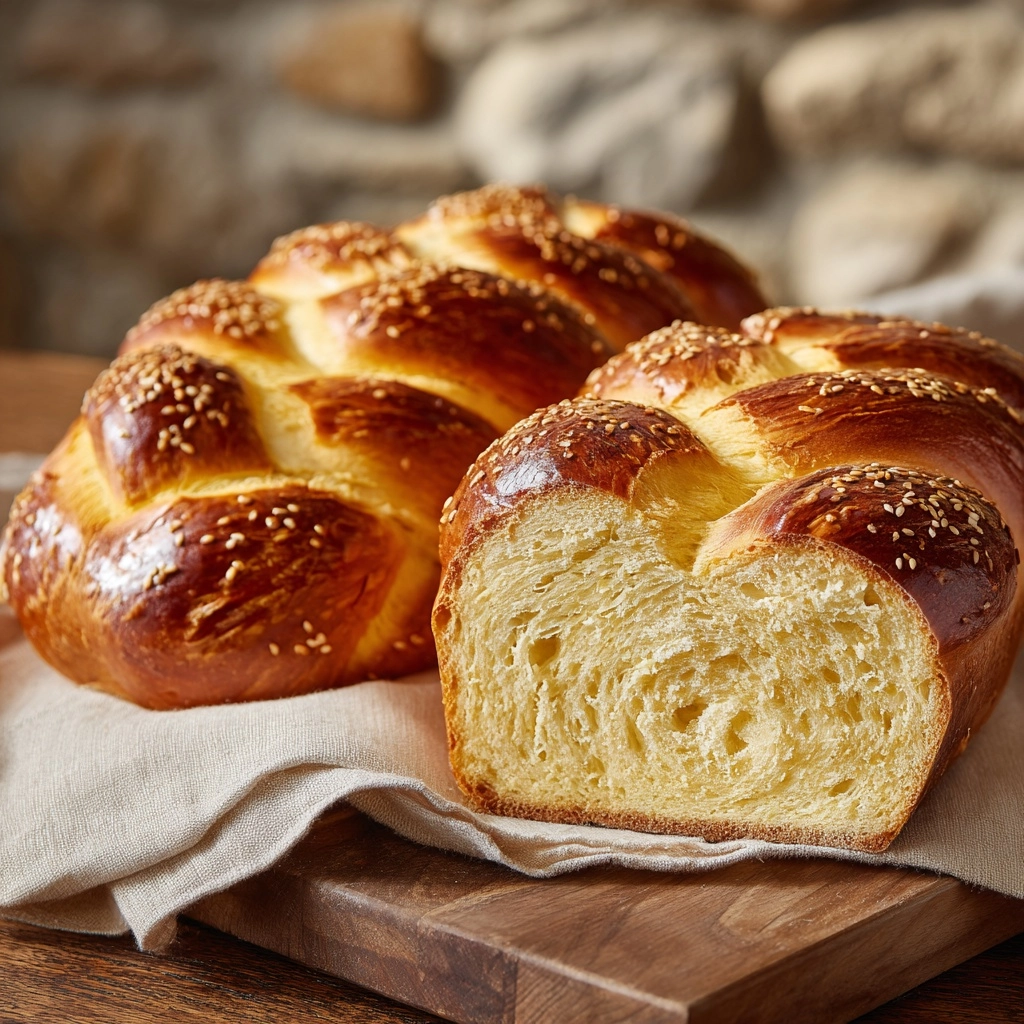
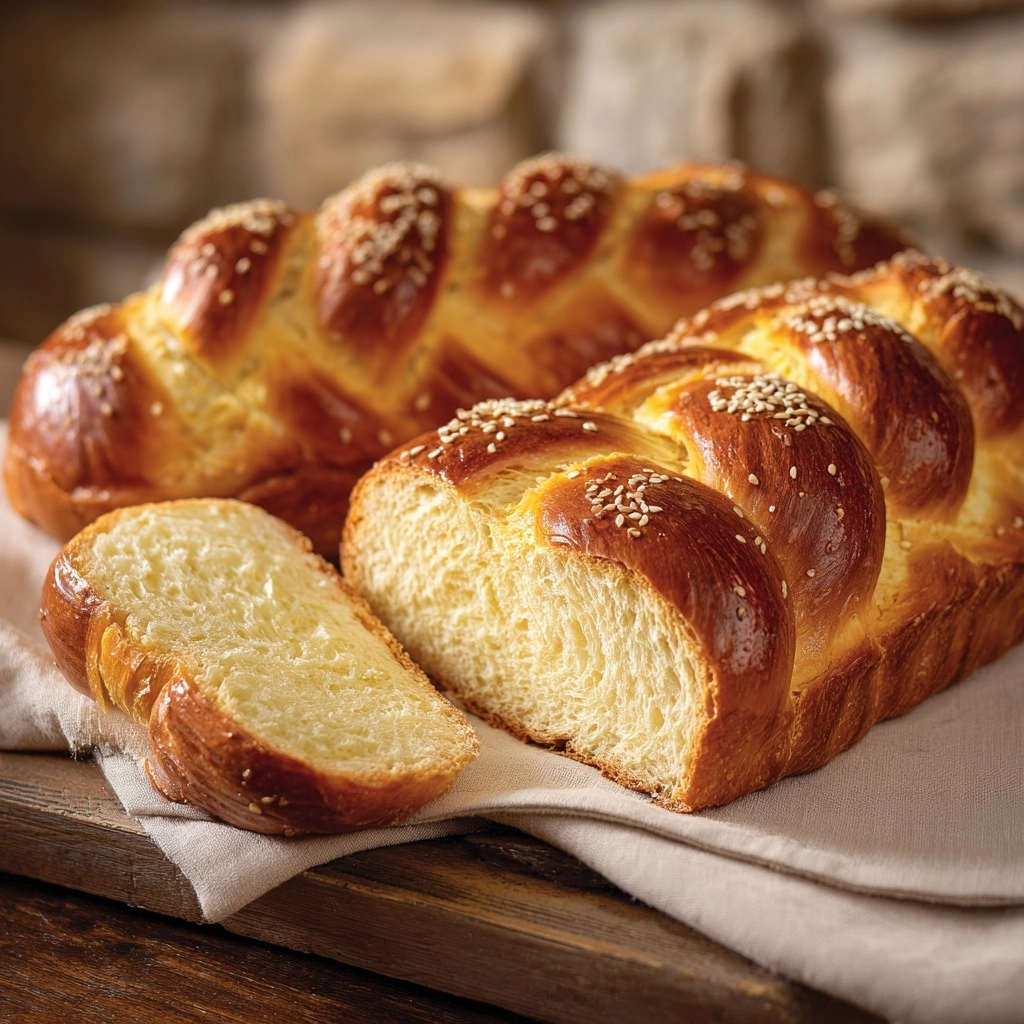
If you’ve ever wanted to master a soft, slightly sweet bread that feels like a warm hug in every bite, this Challah Bread Recipe is exactly what you’re looking for. With its beautifully braided design and golden crust, homemade challah is more than just bread — it’s a centerpiece that brings comfort, tradition, and joy to your table. This Challah Bread Recipe combines simple pantry staples in a way that yields a tender crumb and a rich, eggy flavor that will have everyone asking for more.
Ingredients You’ll Need
Each ingredient in this Challah Bread Recipe plays a key role in creating the perfect texture and flavor, from the fluffy crumb to the golden crust. These simple staples combined just right offer something truly special.
- All-purpose flour (4 cups plus more as needed): The foundation of the dough, providing structure and elasticity for the perfect chew.
- Active dry yeast (2¼ teaspoons): The magic that lifts the dough, giving challah its light, airy texture.
- Granulated sugar (¼ cup): Adds a subtle sweetness that balances the richness of the eggs and oil.
- Salt (1 teaspoon): Enhances all the flavors, making each bite more satisfying.
- Warm water (¾ cup, about 110°F): Activates the yeast and starts the dough’s rising process.
- Vegetable oil (¼ cup): Keeps the bread moist and tender, contributing to its soft crumb.
- Eggs (2 large plus 1 egg yolk for dough): Provide richness, color, and help with the dough’s structure.
- Egg (1 for egg wash): Creates that glossy, golden crust that makes challah so stunning.
- Sesame or poppy seeds (1 tablespoon, optional): Offer a nutty crunch and lovely visual contrast on the loaf’s surface.
How to Make Challah Bread Recipe
Step 1: Activate Your Yeast
Start by whisking together warm water, sugar, and yeast in a large bowl. Let it rest for 5 to 10 minutes until you see a foamy layer rise—that means your yeast is alive and ready to work its magic.
Step 2: Combine Wet Ingredients
Add vegetable oil, two large eggs, one egg yolk, and salt to the yeast mixture. Whisk until everything is well combined. This rich mixture will give your Challah that classic tender crumb and shine.
Step 3: Incorporate the Flour
Gradually add the flour, one cup at a time, stirring as you go. The dough should start sticky but become manageable. If it gets too wet, sprinkle in a little more flour—just enough to knead without sticking excessively.
Step 4: Knead to Perfection
Turn your dough out onto a lightly floured surface and knead vigorously for 8 to 10 minutes. This process develops the gluten, ensuring your bread rises beautifully and has a chewy, delightful texture.
Step 5: Let It Rise
Place the kneaded dough in a lightly oiled bowl, cover with a damp towel, and set it in a warm spot for 1½ to 2 hours. Wait patiently as your dough doubles in size, transforming into a fluffy cloud ready to be shaped.
Step 6: Braid the Dough
After punching the dough down, divide it into 3 or 4 equal sections. Roll each into ropes and braid them together — this is where your challah takes its signature look, a beautiful symbol of tradition and care.
Step 7: Second Rise and Egg Wash
Place your braided loaf on a parchment-lined baking sheet, cover lightly, and let it rise for another 30 to 45 minutes. Then, brush the top with a beaten egg for that irresistible golden shine, and sprinkle seeds on top if desired.
Step 8: Baking Your Challah
Pop the loaf into a preheated 350°F (175°C) oven and bake for 30 to 35 minutes until golden brown and hollow-sounding when tapped. This is the moment your kitchen fills with the warm, inviting aroma that only fresh bread can deliver.
How to Serve Challah Bread Recipe
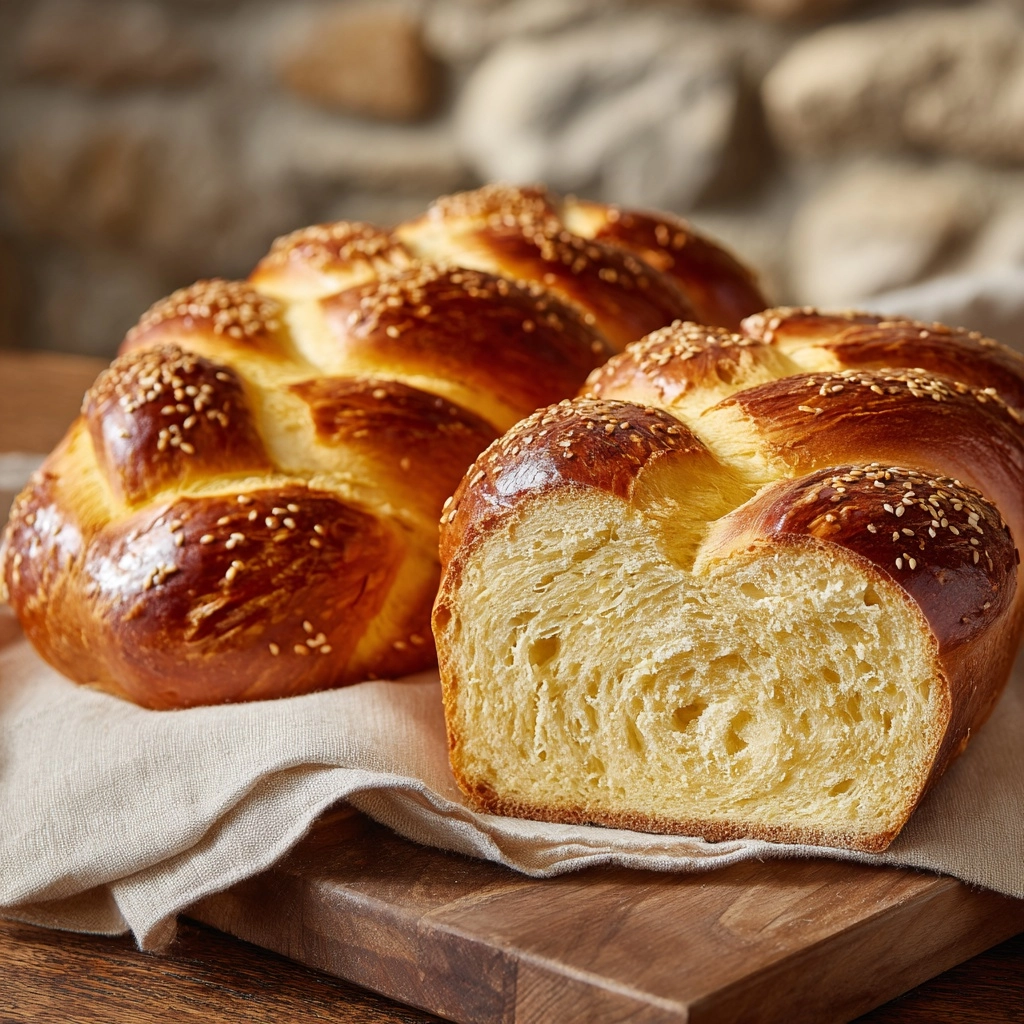
Garnishes
Serve your challah plain to showcase its rich, eggy flavor or garnish slices with a smear of honey butter or a sprinkle of cinnamon sugar for extra indulgence. A light spread of cream cheese or Nutella also turns challah into a decadent treat anyone will love.
Side Dishes
Challah is wonderfully versatile. It pairs beautifully with hearty stews, creamy soups, or vibrant salads. Its slightly sweet profile complements savory dishes like roasted chicken or brisket, making it perfect for festive meals or cozy dinners at home.
Creative Ways to Present
Bring your Challah Bread Recipe to the table as a centerpiece by serving it as mini rolls or use slices for French toast with fresh berries and maple syrup. You could even cube leftover challah for bread pudding or croutons, making every bite memorable.
Make Ahead and Storage
Storing Leftovers
Wrap leftover challah tightly in plastic wrap or store it in an airtight container at room temperature. It will stay soft and fresh for up to 3 days, perfect for enjoying later or turning into sandwiches.
Freezing
If you’d like to keep your challah longer, freeze the whole loaf or individual slices in freezer-safe bags. When wrapped well, it can last for up to 3 months without losing its amazing texture and flavor.
Reheating
To bring your challah back to life, warm slices in a toaster or oven at 350°F for just a few minutes. This will restore that fresh-baked aroma and make the crust crisp while keeping the inside soft and tender.
FAQs
Can I use whole wheat flour instead of all-purpose flour?
Absolutely! Whole wheat flour adds a nuttier flavor and denser texture, though you might want to start with half whole wheat and half all-purpose to maintain softness. Adjust liquid as needed since whole wheat absorbs more moisture.
Why does my challah bread sometimes come out dense?
Dense challah usually means the dough didn’t rise enough or wasn’t kneaded properly. Make sure your yeast is fresh and proofed correctly, and allow ample time for both rises. Kneading helps develop gluten, essential for that airy texture.
Can I make this Challah Bread Recipe vegan?
This traditional recipe relies on eggs for texture and color, but you can experiment with substitutes like flax eggs and plant-based milk. Keep in mind, the flavor and texture will be different, but it can still be delicious!
What’s the best way to braid Challah?
The classic look uses three or four strands, but you can get creative with five or six strands for a more intricate design. Taking your time and gently pulling the ropes to even thickness creates the most beautiful loaf.
Is it okay to let the dough rise overnight in the fridge?
Definitely! Refrigerating the dough overnight not only slows down fermentation but also deepens the flavor. Just let it come to room temperature before braiding and giving it the final rise.
Final Thoughts
This Challah Bread Recipe is more than just a way to make bread; it’s a chance to connect with tradition and fill your home with love and warmth. Whether you’re making it for a special occasion or simply because you love freshly baked bread, give it a try—you won’t regret it. Your kitchen will smell amazing, your family will be delighted, and you’ll have a new favorite recipe to cherish.
Print
Challah Bread Recipe
- Prep Time: 25 minutes
- Cook Time: 35 minutes
- Total Time: 3 hours
- Yield: 1 large loaf (8–10 slices)
- Category: Bread
- Method: Baking
- Cuisine: Jewish
- Diet: Vegetarian
Description
Challah Bread is a traditional Jewish braided bread known for its soft, slightly sweet crumb and shiny golden crust. Made with simple ingredients like flour, yeast, eggs, and sugar, this homemade challah is perfect for festive occasions or everyday enjoyment. The dough is kneaded and braided before baking, resulting in a visually stunning loaf with a rich, tender texture.
Ingredients
Dough Ingredients
- 4 cups all-purpose flour (plus more as needed)
- 2¼ teaspoons active dry yeast (1 packet)
- ¼ cup granulated sugar
- 1 teaspoon salt
- ¾ cup warm water (about 110°F)
- ¼ cup vegetable oil
- 2 large eggs
- 1 egg yolk (for dough)
For the Topping
- 1 egg (for egg wash)
- 1 tablespoon sesame or poppy seeds (optional)
Instructions
- Activate Yeast: In a large mixing bowl, whisk together the warm water, sugar, and active dry yeast. Allow the mixture to sit for 5 to 10 minutes until it becomes foamy, indicating the yeast is active and ready to use.
- Mix Wet Ingredients: Add the vegetable oil, 2 large eggs, egg yolk, and salt to the yeast mixture. Whisk to combine thoroughly, creating a smooth liquid base for the dough.
- Add Flour: Gradually stir in the all-purpose flour, one cup at a time, mixing until a sticky dough forms. Stop adding flour when the dough is cohesive but still tacky.
- Knead Dough: Turn the dough out onto a floured surface and knead for 8 to 10 minutes until the dough is smooth, elastic, and slightly springy. Add additional flour as needed to prevent sticking but avoid making the dough too dry.
- First Rise: Place the kneaded dough in a lightly oiled bowl. Cover with a damp towel and let it rise in a warm, draft-free place for 1½ to 2 hours, or until the dough has doubled in size.
- Shape Dough: After the dough has risen, punch it down to release excess air. Divide into 3 or 4 equal pieces and roll each piece into a rope. Braid the ropes together to form a loaf shape, ensuring the ends are pinched to seal.
- Second Rise: Transfer the braided loaf onto a parchment-lined baking sheet. Cover loosely and let it rise again for 30 to 45 minutes until slightly puffed.
- Prepare Egg Wash: Preheat your oven to 350°F (175°C). Beat the remaining egg and brush it evenly over the surface of the braided loaf to give it a shiny, golden crust.
- Add Seeds and Bake: Sprinkle the loaf with sesame or poppy seeds if desired. Bake in the preheated oven for 30 to 35 minutes until the bread is golden brown and sounds hollow when tapped.
- Cool and Serve: Remove the challah from the oven and allow it to cool completely on a wire rack before slicing to maintain its texture and structure.
Notes
- For a richer and more developed flavor, refrigerate the dough overnight for a slow rise before shaping.
- This recipe yields one large challah loaf ideal for slicing into 8 to 10 servings.
- You can also divide the dough to make rolls or two smaller loaves if preferred.
- Ensure the water for yeast activation is around 110°F to properly activate without killing the yeast.
- Adjust flour quantity as needed depending on humidity and brand of flour.