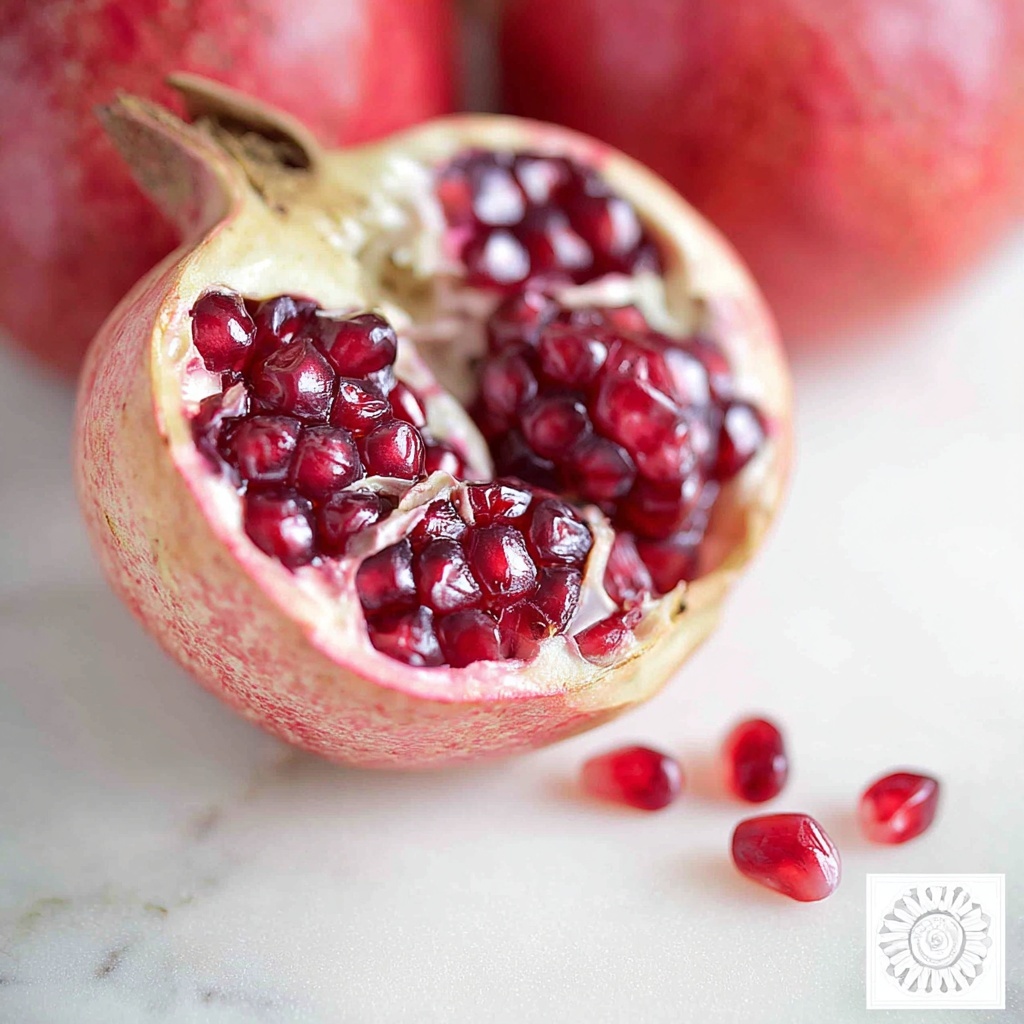
If you have ever wondered how to master the art of extracting those jewel-like seeds from a pomegranate without the usual mess and fuss, you’re in for a treat! The secret lies not just in patience but in knowing exactly how to cut a pomegranate recipe that turns this vibrant fruit into a delightful snack or ingredient. This simple yet satisfying process reveals the luscious arils, bursting with sweet-tart juice, perfect for salads, desserts, cocktails, or simply enjoying on their own. Get ready to discover a foolproof method that brightens your kitchen and your palate!
Ingredients You’ll Need
Gathering your ingredients is a breeze for this recipe, and each element plays a crucial role in delivering that fresh, tangy flavor and satisfying crunch.
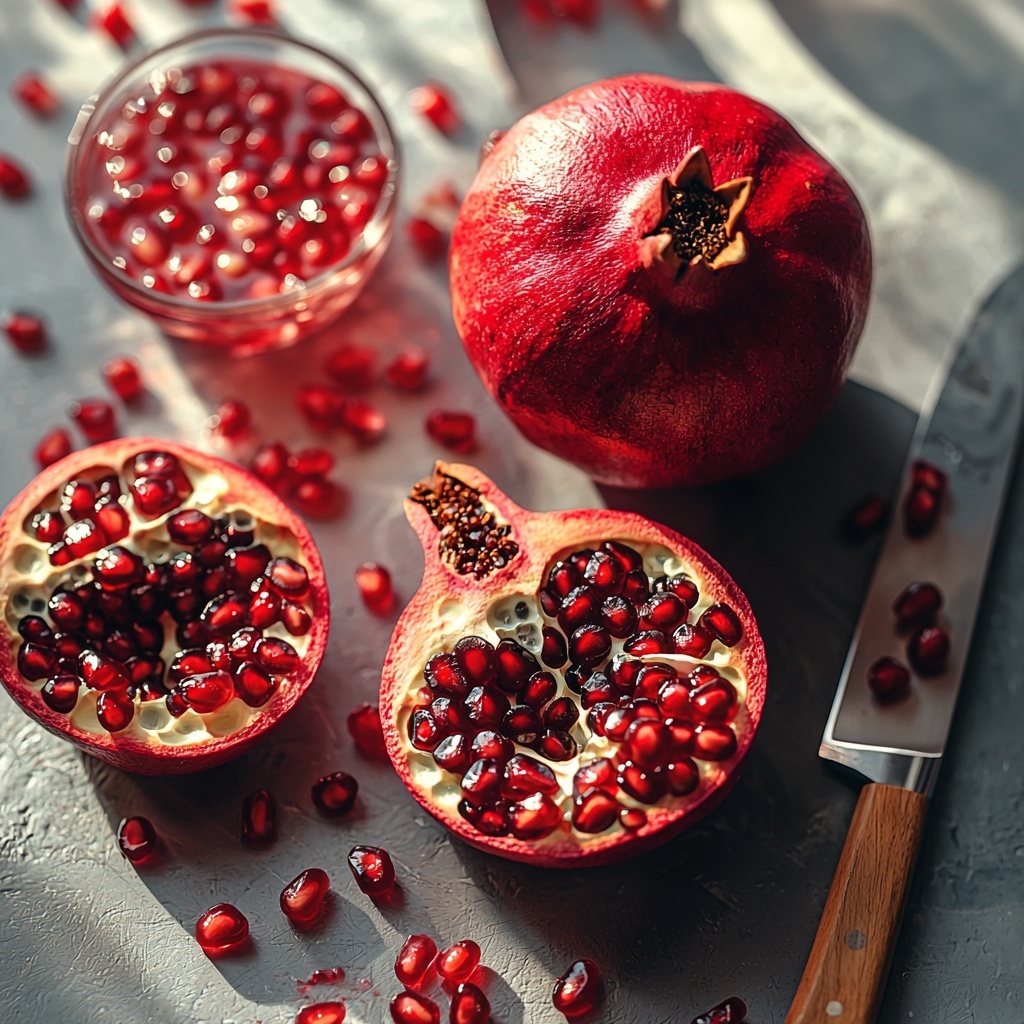
- 1 pomegranate: The star of the show, a ripe, medium-sized pomegranate with firm skin and deep red color is key to perfect results.
How to Make How to Cut a Pomegranate Recipe
Step 1: Remove the Top
Begin by locating the blossom end of your pomegranate, the part opposite the stem. Using a sharp knife, slice about half an inch off the top in a circular motion to expose the interior. This step is essential for easy access to the seeds without damaging them.
Step 2: Score the Ridges
Next, gently feel around the fruit to find its 5 to 6 natural ridges. If you find it tricky, the pale white pith lines visible from the top will guide you. Score the skin about a quarter-inch deep along these ridges, ensuring you do not cut all the way through. This precise scoring facilitates peeling in neat sections.
Step 3: Separate the Sections
Carefully peel the pomegranate apart into the individual segments you scored. You’ll find these sections packed with vibrant arils surrounded by soft membranes, making the fruit look like a natural jewel box ready to be opened.
Step 4: Dislodge the Seeds in Water
Place the pomegranate segments in a large bowl filled with water. Using your fingers, gently brush the seeds away from the white membranes. The seeds will sink to the bottom while the membranes float, which makes cleaning a breeze and helps prevent any staining or juice splattering.
Step 5: Collect and Drain
Remove any floating white membrane pieces from the surface of the water, then pour the arils through a colander to drain. This step ensures you’re left with only the juicy seeds, free of any bitterness from the pith.
Step 6: Optional – Make Pomegranate Juice
If you want to enjoy fresh pomegranate juice, simply place the arils in a citrus juicer and press until the juice is extracted. Repeat this process until you have the desired amount. Fresh pomegranate juice is a refreshing addition to cocktails or a nutritious boost to your day.
How to Serve How to Cut a Pomegranate Recipe
Garnishes
Pomegranate seeds make stunning garnishes that add a burst of color and flavor. Sprinkle them over yogurt, oatmeal, or even roasted vegetables for a sweet and tangy crunch that livens up any dish.
Side Dishes
These seeds are perfect in salad recipes, adding texture and a juicy punch. They pair wonderfully with nuts, leafy greens, and cheeses like feta or goat cheese. Serve alongside grilled chicken or fish for a refreshing complement.
Creative Ways to Present
For a party, try serving pomegranate seeds in clear glasses or crystal bowls to showcase their ruby glow. You can also freeze them in ice cubes to add a festive pop to drinks or scatter them atop desserts like panna cotta or chocolate mousse for an unexpected twist.
Make Ahead and Storage
Storing Leftovers
If you have leftover pomegranate seeds, store them in an airtight container in the refrigerator. They will keep fresh for up to five days, making them easy to enjoy whenever you want a quick, healthy snack or a flavorful topping.
Freezing
You can freeze pomegranate arils by spreading them in a single layer on a baking sheet and freezing until solid. Transfer to a sealable bag or container for storage. Frozen arils last several months and are perfect for smoothies or cooking in sauces later.
Reheating
Pomegranate seeds are best enjoyed fresh or cold, so reheating is generally not recommended. However, if used in warm dishes like sauces or compotes, add them near the end of cooking to preserve their texture and brightness.
FAQs
Can I cut a pomegranate in half instead of scoring the ridges?
While cutting a pomegranate in half might seem quick, it often results in juice splattering and broken seeds. Scoring along the natural ridges and gently prying it apart helps keep the arils intact and reduces mess.
Why do some pomegranate seeds taste bitter?
The bitterness often comes from the white pith or membrane surrounding the seeds. That’s why rinsing the seeds in water after separating them is essential—it removes these bitter bits and leaves you with sweet, juicy arils.
Is it necessary to use a bowl of water when cutting a pomegranate?
Using water is a clever trick to prevent juice from splattering and to make it easier to separate seeds from the pith. The seeds sink while the membranes float, simplifying cleanup and yielding clean seeds.
How do I know when a pomegranate is ripe?
A ripe pomegranate is heavy for its size, with vibrant, unblemished skin. Giving it a gentle tap should produce a metallic sound, indicating juicy arils inside.
Can pomegranate arils be eaten raw?
Absolutely! Pomegranate seeds are delicious raw, and their juicy, sweet-tart flavor makes them a fantastic snack or salad topper just as they are.
Final Thoughts
Now that you’ve unlocked the secrets of how to cut a pomegranate recipe, you’re ready to impress friends and family with perfectly extracted seeds bursting with flavor. This simple method takes the frustration out of pomegranate prep, inviting you to enjoy its many culinary possibilities with ease and delight. Grab a pomegranate and dive in—your taste buds will thank you!
Print
How to Cut a Pomegranate Recipe
- Prep Time: 5 minutes
- Cook Time: 0 minutes
- Total Time: 5 minutes
- Yield: 4.4 servings
- Category: No-Cook
- Method: No-Cook
- Cuisine: Mediterranean
Description
Learn the simple and effective way to cut and deseed a pomegranate, including a method to separate the juicy arils from the bitter white membranes. This guide also shows how to use the arils to make fresh pomegranate juice.
Ingredients
Ingredients
- 1 pomegranate
Instructions
- Cut the Top: Locate the blossom end of the pomegranate and cut about ½-inch from the top in a circular motion to remove it, exposing the inner seeds.
- Score the Ridges: Feel or visually locate the 5-6 natural ridges on the sides of the pomegranate where the white pith lines run. Make shallow cuts, about ¼-inch deep, along these ridges without cutting all the way through.
- Separate the Sections: Carefully pry apart the pomegranate along the scored lines to open it into sections, revealing the seeds (arils) inside.
- Remove Seeds in Water: Submerge the sections in a large bowl of water and use your hands to brush the arils away from the white membranes. The seeds sink to the bottom while the membranes float.
- Drain and Discard Membranes: Skim out and discard the floating white membranes from the water, then drain the seeds in a colander.
- Make Pomegranate Juice (Optional): Place the extracted arils into a citrus juicer and press to extract juice. Repeat until you have the desired quantity of juice.
Notes
- Cutting the pomegranate carefully prevents juice from spilling and reduces mess.
- Using water to separate seeds from membranes helps avoid bitterness.
- Fresh pomegranate juice is best consumed soon after juicing for maximum flavor and nutrients.
- Store unused arils in an airtight container in the refrigerator for up to 5 days.